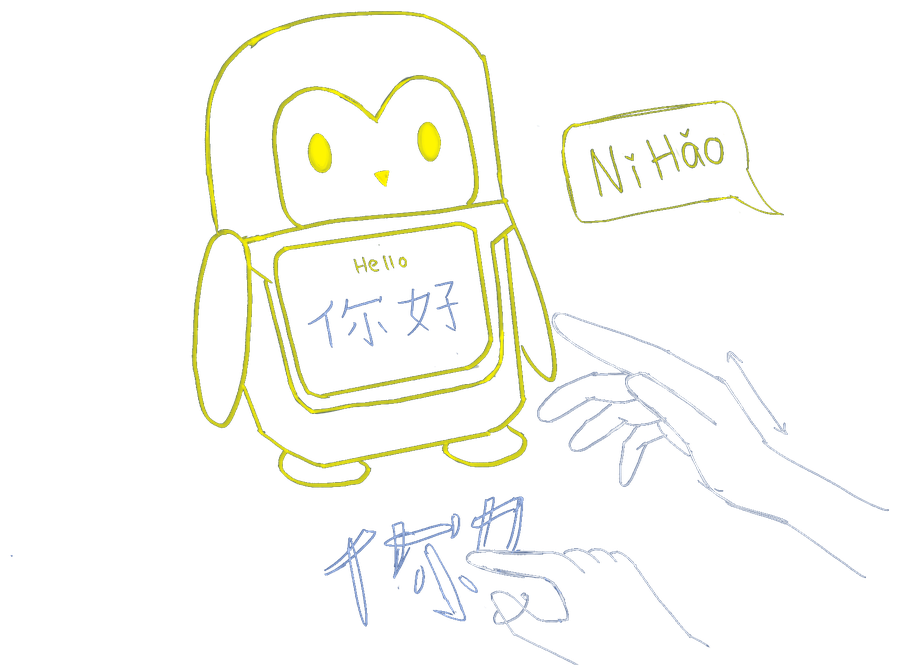
“I was 5 years old,
when I became my mother's translator”
This is the reality for many Australian migrant children. They become the bridge for their parents when adjusting to new countries to support their family within this challenging transition.
This pressure often finds children in high-stake situations, causing strain on mental health and consequently making their navigation in bi-cultural identity difficult.
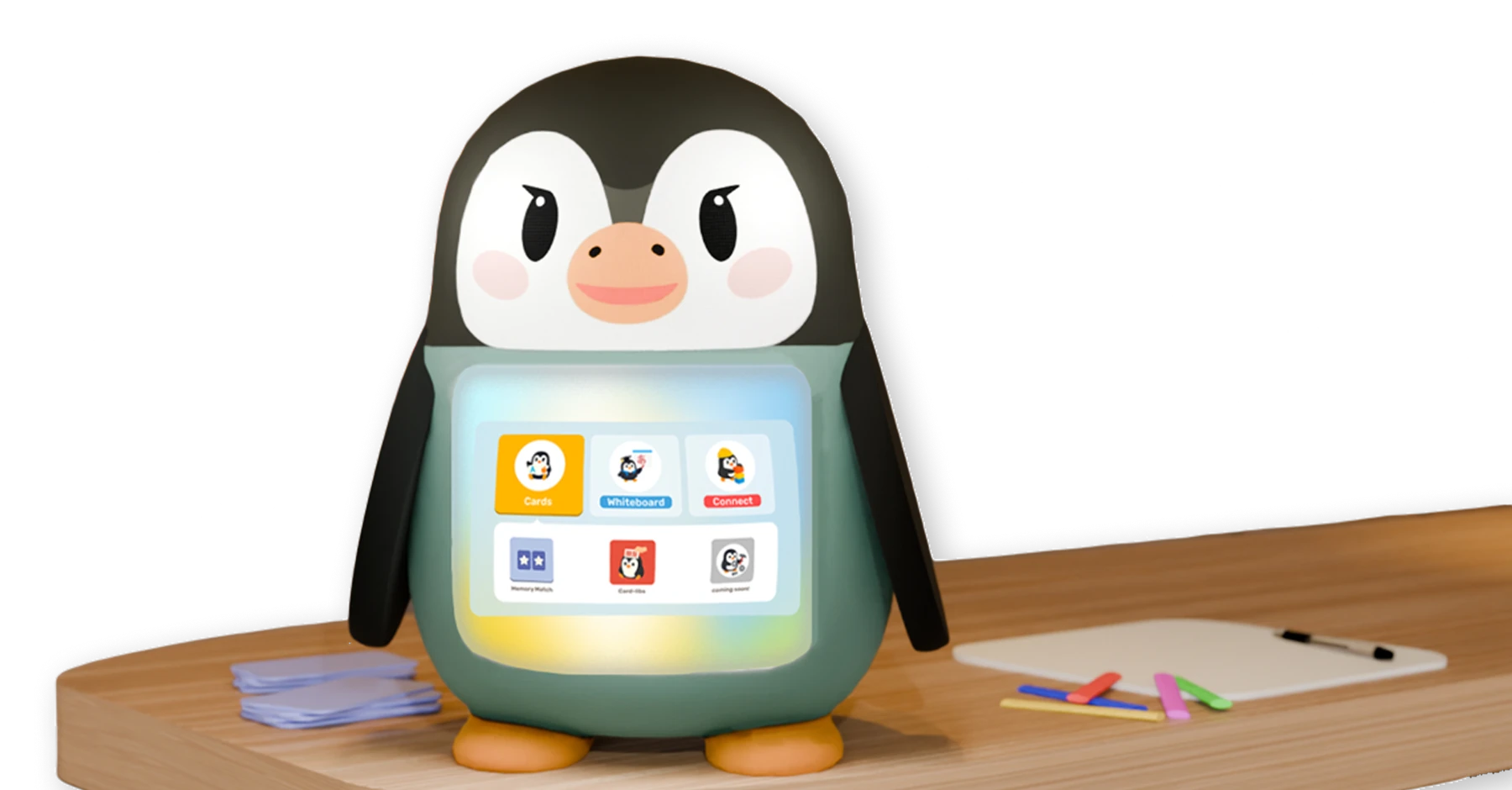
This problem led to the vision of Kinori, a new way for language to be taught, and support families to build their confidence in navigating everyday life.
I worked within a team of 5, where I led visual execution from designing game modes, language learning content & tools displayed in Kinori's UI.
A new way to support learning
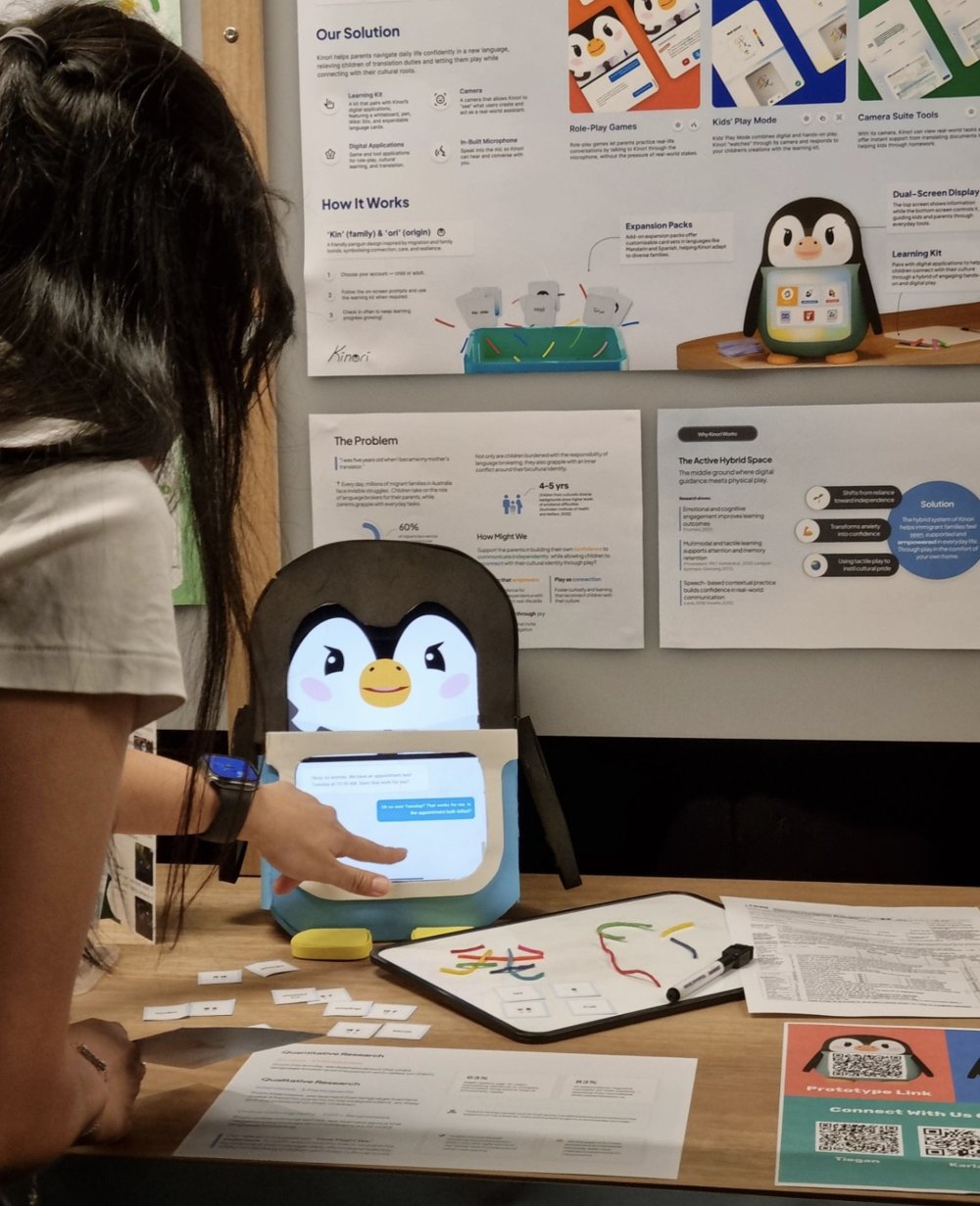
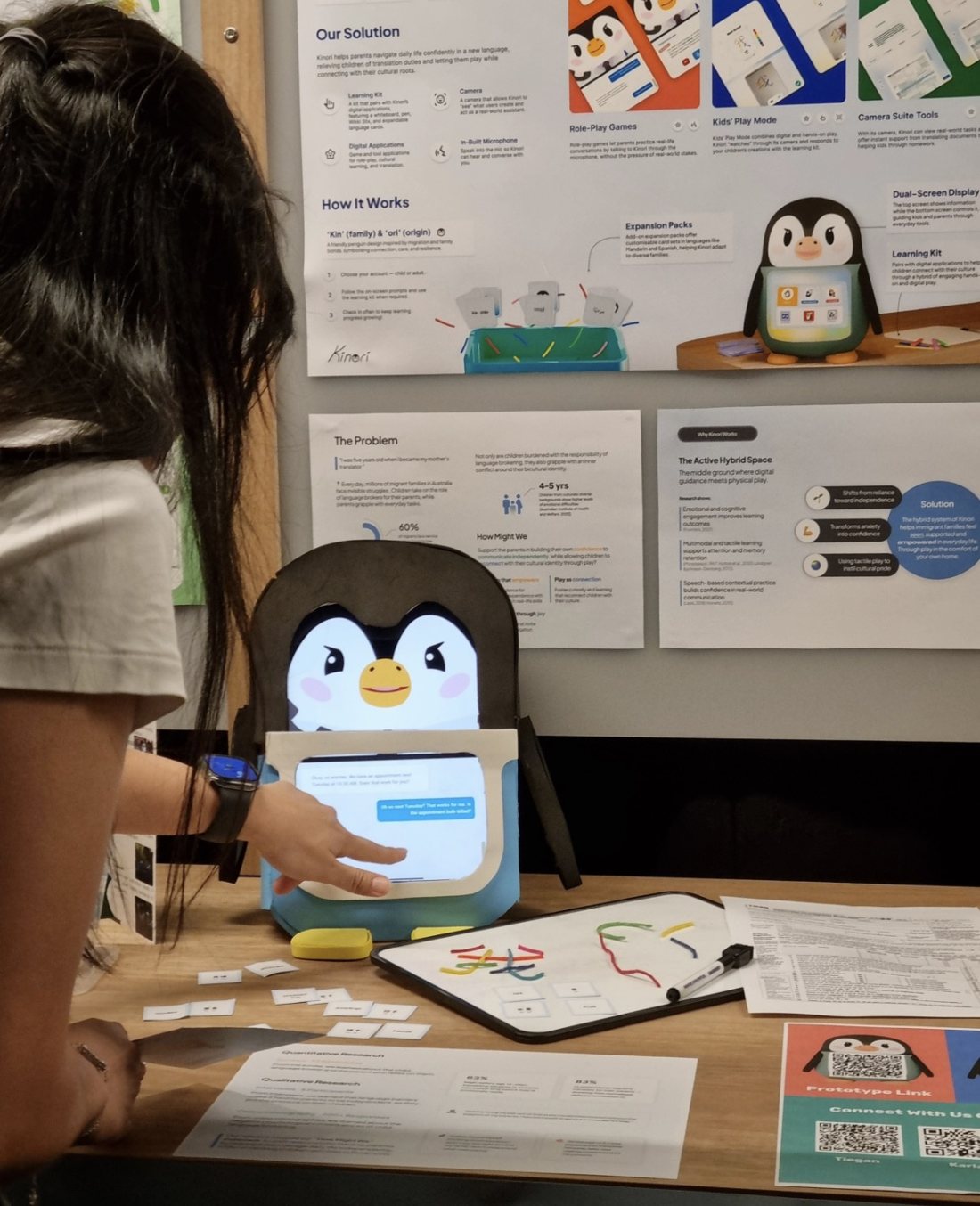
We reimagined what language learning could look like for both children and parents. Kinori's camera is able to overlook the family's actions, from scanning documents to recognising hand gestures.
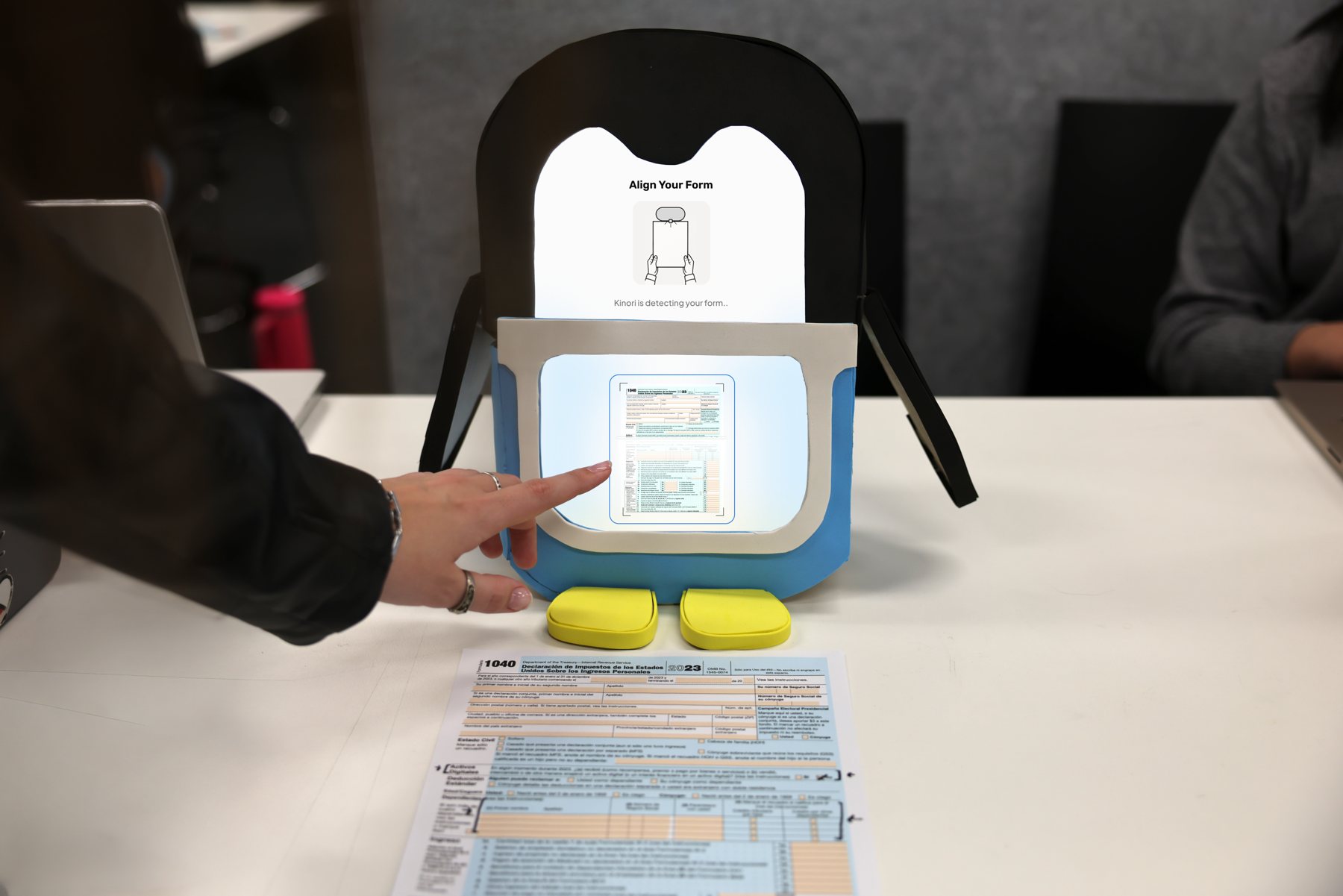
1. Form translation
Place the form in front of Kinori to scan and translate the document. Parents can tap to select words they wish to translate, understand sentences contextually, or have Kinori summarise the translation in their chosen language.
2. Role-play games
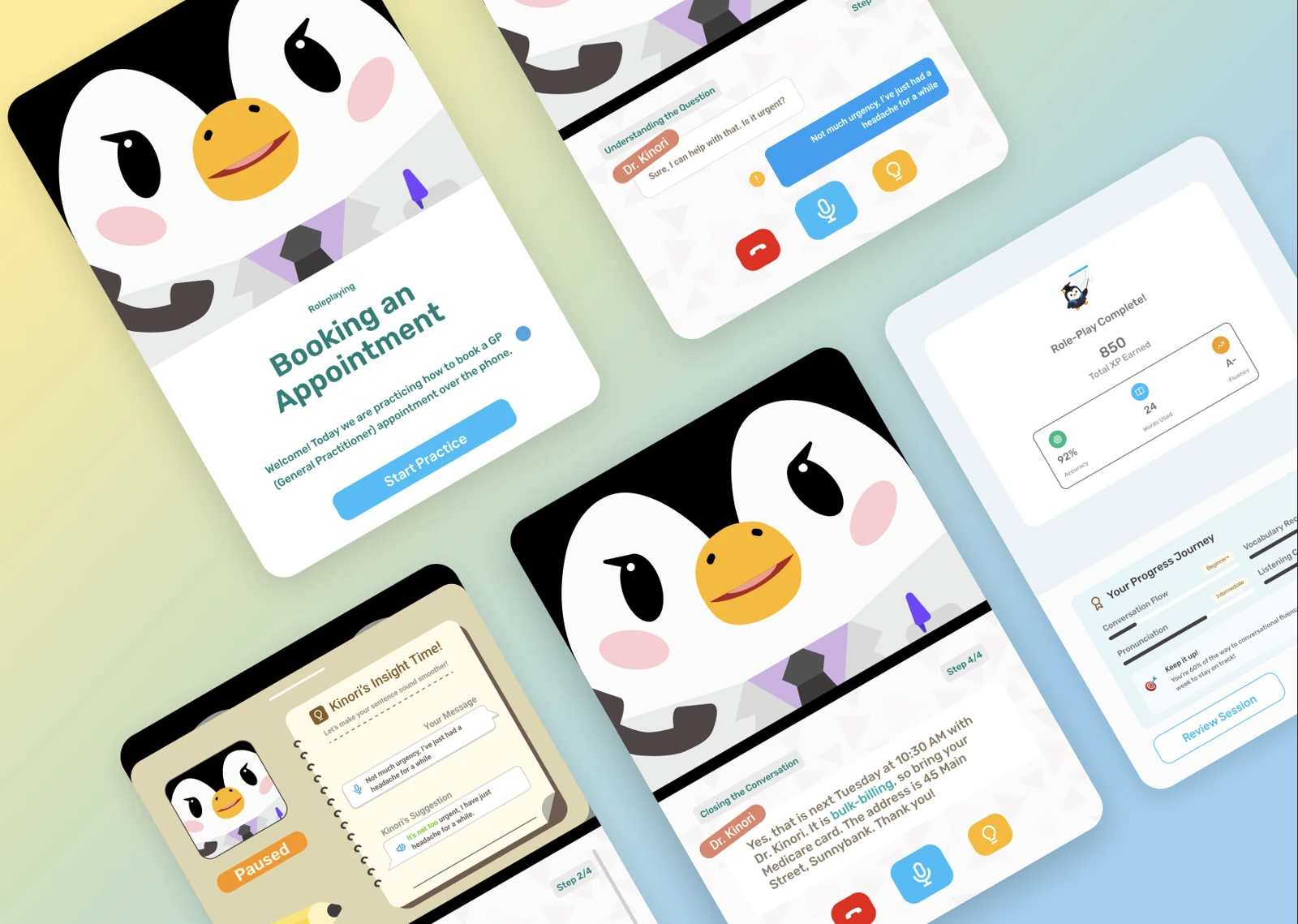
Role-play games let parents practice real-life conversations by talking to Kinori through the microphone, without the pressure of real-world stakes.
3. Kids' play mode
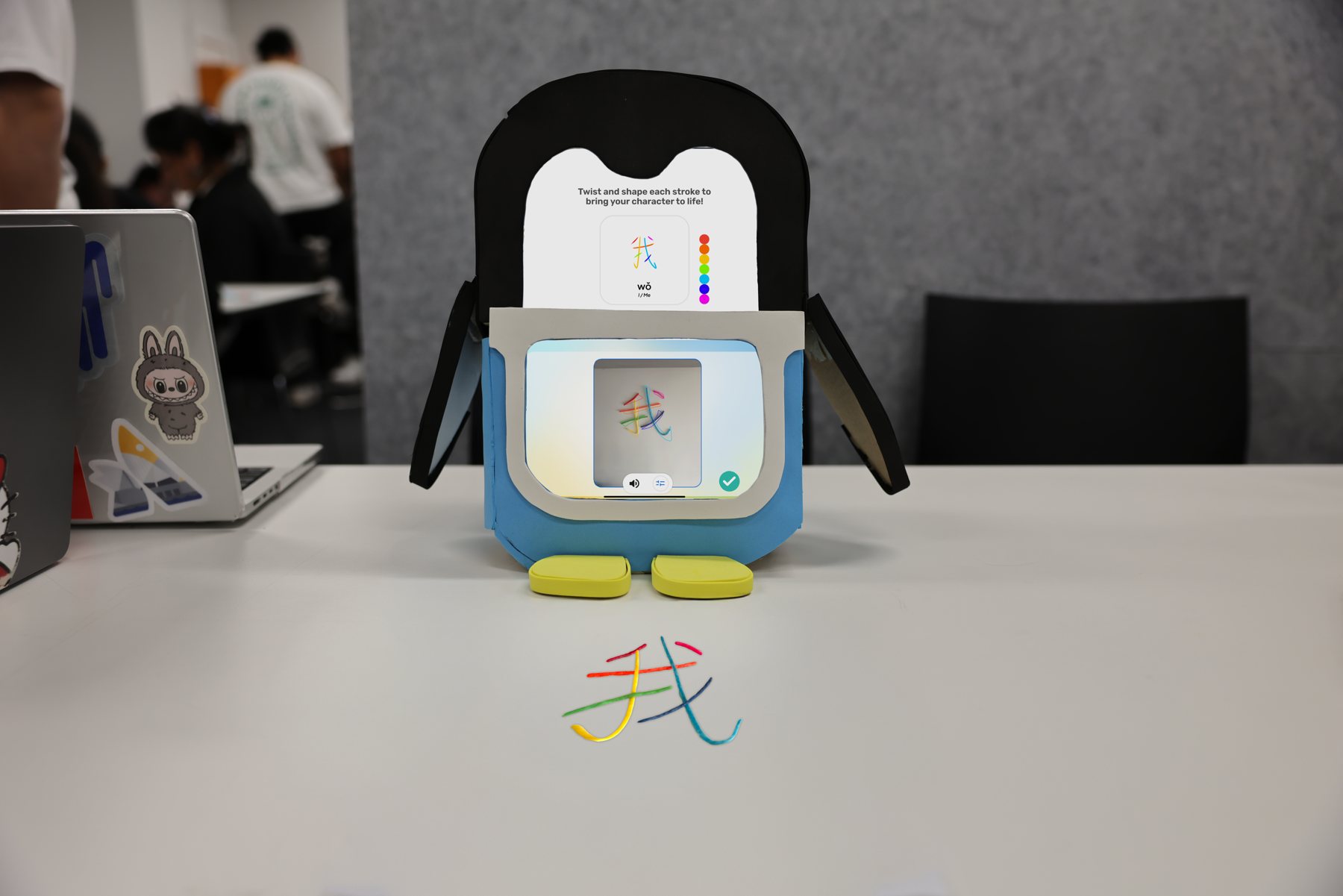
Kids' Play Mode combines digital and hands-on play. Kinori "watches" through its camera and responds to your children's creations with the learning kit.
4. Camera powered tool
With its camera, Kinori can view real-world tasks and offer instant support. From translating documents to helping kids through homework.
5. Dual screen design
Dual-screen design makes interactions simple for all ages. The top screen shows information while the bottom screen controls it, guiding kids and parents through everyday tools.
Three things Kinori had to get right
Design that empowers
Building confidence for everyday independence with tools that teach real-life skills.
Play as connection
Foster curiosity and learning that reconnects children with their culture.
Consistency through joy
Initiate routines that invite daily use, not obligation.
Listening to our users' stories
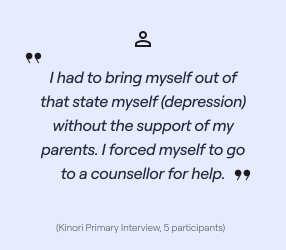
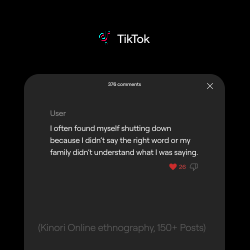
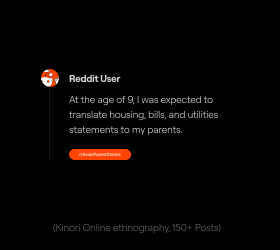
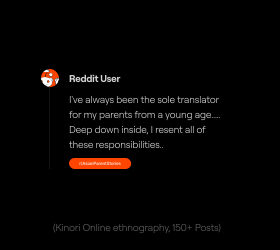
To further develop our understanding, the team gathered primary research through interviews, surveys, and online ethnographies to reaffirm and deepen our understanding of the problem space.
Design feature iterations
Iteration 1. Interaction points were too hidden
Important features were too confusing to notice at a glance, making the experience confusing to navigate.
Iteration 2. Parent and child content weren't clearly distinguishable
Children and parent features were too binded together, making it difficult for each user group to recognise their content.
Final demo
Reflection
On advocating for something I closely resonated with
This topic was personal, which made pushing for further impact rewarding but difficult — there were hundreds of possible directions. I learned to keep looking back, refining, and realigning with the people we were actually designing for.
On designing across digital and physical at once
This was a new kind of design medium for me. Building one holistic experience across screens and physical objects stretched the kinds of interactions I knew how to think about.
On what the role of a designer actually requires
Beyond empathy and adaptability, this project asked for flexibility within a team, clear communication, and care — not just for the user, but for the people I was building alongside.